What Is Bone Grafting Before a Dental Implant?
Disclaimer: The information provided in this article is for educational purposes only and does not substitute for professional medical or dental advice. Always consult with a qualified dentist regarding your specific condition.
You’ve finally decided to replace your missing tooth with a dental implant. However, during your consultation, your dentist informs you that you need a bone graft first.
If this sounds intimidating, don’t worry! Bone grafting is an incredibly common, safe, and routine procedure performed at Canary Dental Clinic in Surrey. Here is everything you need to know.
Why Do I Need a Bone Graft?
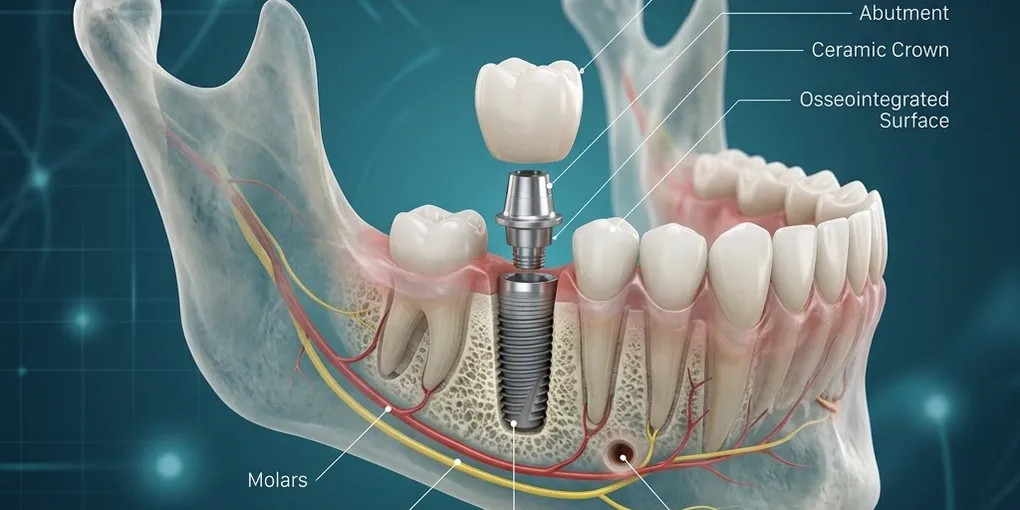
A dental implant requires a solid foundation to be successful. It must be anchored into thick, dense jawbone.
When you lose a tooth, the jawbone in that specific area stops receiving stimulation from chewing. Without this stimulation, the body assumes the bone is no longer needed and begins to resorb (melt away) the bone tissue. If your tooth has been missing for several years—or if you lost it due to severe periodontal disease or trauma—your jawbone may be too thin or too soft to hold an implant securely.
A bone graft rebuilds this foundation, ensuring your new implant will be strong and stable.
How Does Bone Grafting Work?
The concept of a dental bone graft is simple: the dentist adds bone grafting material to the area where the bone is deficient.
- The Material: The grafting material usually consists of safely processed bone minerals (which can be synthetic, or from a donor). It looks like coarse sand.
- The Procedure: During a minor surgical procedure under local anesthesia, the dentist places the grafting material into the empty tooth socket or the deficient area of the jaw. It is then covered with a special protective membrane.
- The Regeneration: The grafting material acts as a “scaffold.” Over the next few months, your body will naturally send cells to the area, growing your own new, healthy bone around the graft material.
Types of Bone Grafts
Depending on your specific situation, you might need:
- Socket Preservation: Performed immediately after a tooth extraction to fill the empty hole and prevent the bone from collapsing while it heals.
- Ridge Augmentation: Used to widen or heighten the jawbone if it has already shrunk significantly over the years.
- Sinus Lift: If you are getting implants in your upper jaw (near the molars), the sinus cavity might be too close. A sinus lift gently raises the sinus floor and adds bone underneath it to create room for the implant.
The Healing Process
The bone grafting procedure itself is relatively quick and painless, thanks to modern anesthetics. Post-operative discomfort is usually minor and easily managed with over-the-counter pain medication.
However, patience is key. It typically takes 3 to 6 months for your body to grow enough new, solid bone before the actual titanium implant can be placed.
Frequently Asked Questions (FAQ)
Can the implant and bone graft be done on the same day?
In some minor cases, if only a very small amount of bone is needed, the graft and the implant can be placed simultaneously. However, for significant bone loss, the graft must heal and solidify for several months first.
Is bone grafting covered by the CDCP?
Complex oral surgeries and grafting procedures related to implants are generally not covered by the Canadian Dental Care Plan (CDCP).
Schedule Your Assessment in Surrey
Unsure if you have enough bone for an implant? At Canary Dental Clinic, we use advanced 3D imaging to evaluate your jawbone precisely. Our Mandarin and English speaking team is ready to guide you through the entire process.